The Further a Project Progresses, the Fewer Options Remain
Reduce future problems by organizing potential issues as early as possible.
Completing the installation is not the finish line.
During the early stages of a project, there are many options to consider, such as equipment selection,
power outage planning, future expansion, and maintainability.
As construction progresses, equipment is installed, and the facility begins operation, many of those options gradually disappear.
Some changes can still be made later.
However, they often require significant cost and time, and in some cases may require a temporary shutdown of the facility.
That is why important decisions should be carefully considered as early as possible.
From the perspective of electrical systems, I help organize issues that may arise after installation at an early stage,
supporting discussions that reduce downstream rework.
Looking at Equipment from the Perspective of Failure
What would happen if a power outage occurred due to internal or external factors?
What would happen to the power supply, control system, and recovery process if equipment related to the electrical system,
such as pumps or motors, were to stop operating?
What would happen if additional equipment needed to be installed in the future?
What would happen if the space prepared for new equipment turned out to be insufficient, preventing the equipment
from performing as intended?
What could happen if equipment specifications were simplified or lower-quality materials were selected to reduce the initial project cost?
It is important to consider not only normal operation, but also abnormal conditions and future operation.
This is how I look at electrical systems—by working backward from potential failures.
Why It Is Better to Think Ahead
As a project progresses, flexibility gradually decreases.
During the design stage, as mentioned earlier, there are still many options available.
However, once construction begins, equipment is installed, and commissioning approaches, many of those options disappear.
Making improvements at that stage often requires significant cost and time. In many cases, existing equipment must continue operating
while the necessary modifications are carried out.
When work involves high-voltage electrical systems, there is also the risk of temporary shutdowns, creating additional challenges
for everyone involved.
These are the kinds of issues that can be examined much more effectively during the design stage.
What My Experience Can Contribute
◾️ Identifying potential oversights and aligning expectations during equipment introduction
◾️ Organizing technical understanding between international equipment manufacturers and electrical professionals in Japan
◾️ Organizing technical issues that arise during commissioning
◾️ Supporting electrical planning with future operation and equipment upgrades in mind
How I Can Contribute to Your Project
01. Design Stage
While considering future expansion and equipment upgrades, I help organize potential issues at an early stage,
before they become difficult to address later in the project.
Even if a design appears correct on the drawings, issues may still arise during construction or operation.
I help organize issues that may lead to oversights by considering how the equipment will be operated and maintained after installation.
Examples of Support During the Design Stage
- Electrical design review from the perspective of electrical implementation
- Reviewing future expansion and equipment upgrade considerations
- Evaluating backup power systems and power outage planning
CASE ①
In some cases, it is only after the facility begins operation that a gap becomes apparent
between the equipment's capabilities and the actual operating conditions.
It is important to evaluate not only the equipment itself, but also how it will be operated in practice.
CASE ②
Equipment should be planned with future inspection and maintenance requirements in mind.
Some operational issues only become apparent after the facility begins operation.
In some cases, decisions that were not reflected during the design stage only become evident after commissioning.
02. Construction Preparation Stage
I help organize technical understanding between international equipment manufacturers and electrical professionals in Japan.
When introducing internationally manufactured equipment into Japan, there are times when what manufacturers consider standard practice differs from what electrical professionals in Japan consider standard practice.
I help organize those technical differences in understanding so that each specialist can move the project forward with a shared understanding.
Construction Preparation Stage – Examples of Consultation
- Organizing technical understanding between international equipment manufacturers and electrical professionals in Japan
- Reviewing technical specifications for cables, control signals, and related electrical systems
- Reviewing technical specifications during material selection
CASE ③
When overseas-standard equipment is installed in Japan, it may not be possible to apply the drawings exactly as they are.
In one project, replacing overseas-standard cables with Japanese-standard cables required larger cables than originally expected,
making it necessary to review the connection method for the equipment.
Even when there is no problem with the equipment itself, differences in specifications can reveal issues that only become apparent
during the installation stage.
CASE ④
Manufacturer drawings alone may not provide enough information required for equipment installation.
In one project, the drawings appeared to be acceptable, but site verification showed that the required wiring conditions were different,
making additional work necessary.
These differences in understanding can be reduced by carefully reviewing manufacturer drawings and installation manuals before equipment installation.
03. Equipment Delivery & Installation Stage
There are things that can only be confirmed once equipment arrives on site.
I help organize issues that cannot be identified from drawings alone, along with the points that should be verified
after the equipment has been delivered.
I also support technical questions and decisions that arise during installation.
Examples of Consultation During the Equipment Delivery & Installation Stage
- Verifying delivered equipment
- Organizing installation-related concerns
- Reviewing manufacturer requirements
CASE ⑤
Equipment shipped from overseas may be affected by long transportation periods and shipping conditions.
In one project, loose screws and bolts were found inside the equipment upon arrival.
Although these issues are easy to overlook, checking them is an essential part of overseas equipment installation.
CASE ⑥
Some issues cannot be identified from drawings or manuals alone and only become apparent after the equipment arrives on site.
Inspecting the equipment after delivery can clarify connection methods and installation requirements.
Inspecting delivered equipment is an important step in the installation process.
CASE ⑦
Even when drawings and specifications do not mention them, each manufacturer may have its own assumptions and
installation requirements.
In one project, what was considered standard practice in Japan differed from the manufacturer's expectations,
making it necessary to revise the installation method afterward.
These differences in understanding can often be reduced through early communication and careful verification.
04. Commissioning Stage
I work alongside manufacturers during commissioning and support root cause investigation and improvement whenever issues arise.
Examples of Consultation During the Commissioning Stage
- Supporting manufacturer-led commissioning
- Supporting collaboration between manufacturers and electrical professionals
- Organizing technical root causes
CASE ⑧
Even when equipment has been installed according to the drawings, it may not operate as expected during commissioning.
In one project involving a system composed of equipment from multiple manufacturers, different assumptions made
by each manufacturer prevented the system from operating correctly.
Although I was not responsible for leading the commissioning process, I supported the manufacturer's root cause investigation
wherever I could.
During that process, I organized information and technical understanding that had been scattered across multiple manufacturers and prepared documentation to visualize the relationships between the electrical and control systems.
Who This Service Is For
For Factory Owners
Keeping equipment running is not the end goal.
Power outages. Equipment failures. Facility expansion. Equipment renewal.
For those who want to build factories that remain reliable while anticipating future operational challenges.
For International Equipment Manufacturers
When introducing equipment into Japan, many issues cannot be identified from drawings and specifications alone.
For those who want to achieve a more reliable project startup in Japan by considering installation, commissioning,
and future operation from the beginning.
For Project Stakeholders Working with Electrical Professionals
For those who want to reduce rework and differences in understanding after equipment installation begins,
allowing each specialist to focus on their own expertise.
For Chambers of Commerce, Local Governments, and Embassies
For those who want to support overseas companies establishing operations in Japan from an electrical perspective.
Why I Believe This Service Matters
When problems occur on site, everyone's attention naturally shifts to solving them.
That is only natural.
Production cannot simply be stopped.
Neither can the factory.
However, through the many situations I experienced on site, I gradually came to realize one thing.
Most problems do not begin when a failure occurs.
They begin much earlier—with decisions and assumptions made long before.
I am neither a design engineer nor an equipment manufacturer.
Nor am I responsible for managing an entire project.
Even so, I have had a role to play on site.
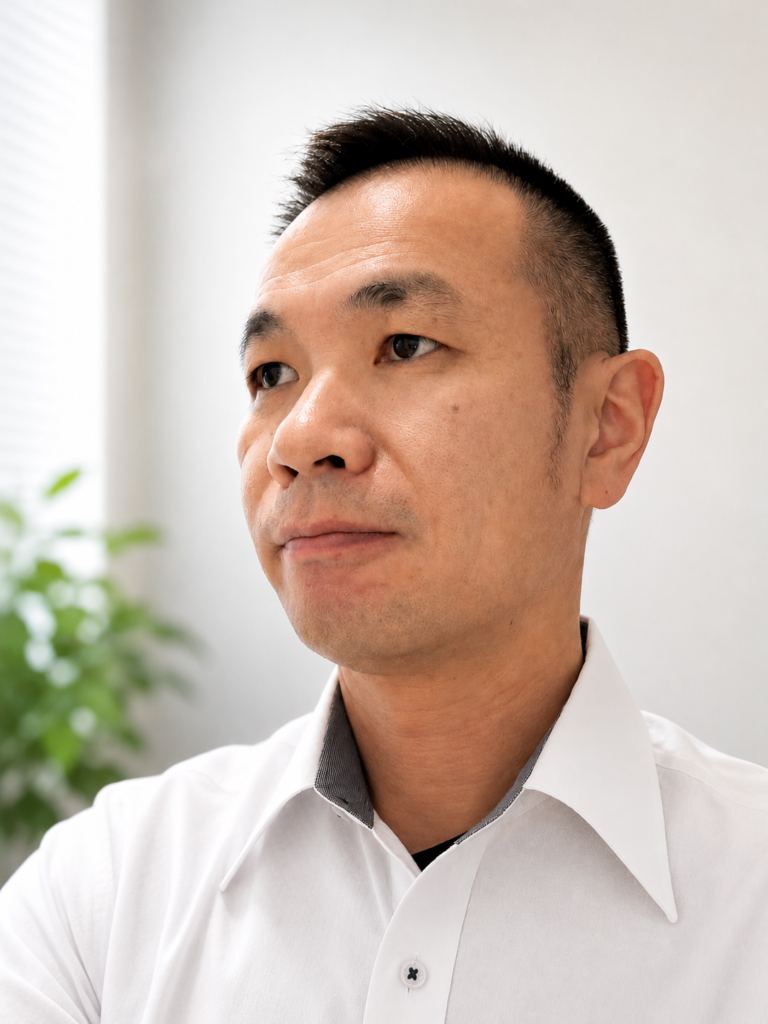
Mamoru Murakami
Representative Director | Murakami Denko Co., Ltd.
I help organize issues that arise at the boundaries between electrical design, installation, commissioning, and operation, supporting communication between international manufacturers and electrical contractors in Japan.
After working as an electrician on residential and industrial electrical projects, I became involved in projects introducing overseas industrial equipment into Japan.
In addition to performing electrical installation work on site, I have supported projects by organizing technical understanding between overseas equipment manufacturers and Japanese electrical professionals, providing technical support during equipment installation, supporting commissioning, and assisting with equipment maintenance.
Through these experiences, I came to realize that many problems do not begin when equipment fails.
They often begin much earlier—with assumptions, decisions, and technical misunderstandings
made long before.
I am not a design engineer.
However, I can help organize issues from the perspective of the field and connect technical understanding among the people involved, helping reduce future rework and technical problems.
Therefore, my role is to organize the issues and differences in understanding that arise throughout the design, equipment installation,
commissioning, and operation phases.
I help overseas manufacturers and Japanese electrical professionals move projects forward with a shared understanding.
That is my role.
I believe this helps reduce misunderstandings between stakeholders and ultimately minimizes future rework and operational problems.
Because many problems begin with a series of small decisions, such as:
- something that was not fully considered during the design phase
- something that was not confirmed before installation
- someone deciding, "It will probably be fine."
I have seen many situations where these small decisions accumulated and eventually became major issues during commissioning or
after the equipment entered operation.
I cannot predict the future.
Nor do I believe that every problem can be identified in advance, even when involved from the design stage.
However, the earlier a project is, the more options remain.
By organizing potential issues early, it is possible to reduce problems that become difficult to address later.
That is why I prefer to become involved as early as possible.
I believe electrical systems should be considered not only when they are operating normally, but also during abnormal conditions and
throughout their future operation.
That way of thinking is the conclusion I reached through my own experience—and it is the starting point of this service.
CONTACT
Many challenges in overseas equipment projects only become visible after problems occur.
From another perspective, that means the earlier a project is discussed, the more options remain available.
Tell me about your current situation.
Together, we'll organize the situation, clarify the challenges, and determine whether and how I can help.